Wednesday, September 19, 2012

Allergic to nuts?


A group of children see the Canadian backpacker on his way to the Ollantaytambo train station. He wants to purchase the ticket that can take him to Machupicchu.

“Good morning,” choir the children.

“Good afternoon,” says the Canadian while checking his Rolex.

They agree on the time difference.

“Good afternoon.”

“How are you?” asks the oldest.

“I’m very well, thank you for asking.”

The children like to practice their language skills where the common language in Peru is Spanish.

“Where’s the money?”

“Pardon me?”

“The money?”

They hold their hands for Nuevo Sol.

“You don't work for me, do you?”

The boy offers to carry the backpack, but the Canadian refuses.

“I have to run for the train,” says the Canadian.

“The train leaves hour, you much time,” says the child in broken English.

“Hungry,” says the little one.

The Canadian takes some pictures of the children with his Nikon.

For this privilege, he came to learn, one has to pay at least ten Soles.

After closing the lens he digs in the backpack, feels Planters’ snack packs.

“Are any of you allergic to nuts?”

That must be a Canadian concept.  The snack packs contain a healthy mixture of dried fruit and nuts.

The conversation was worth every word and the children share the treats with great appreciation.       


The Canadian wishes he paid the ten Soles, because there are no snacks for sale on the train and it takes almost an hour and a half to reach Machupicchu...


Photo's courtesy of Intuitive Composition

City of Friendship - Huaraz


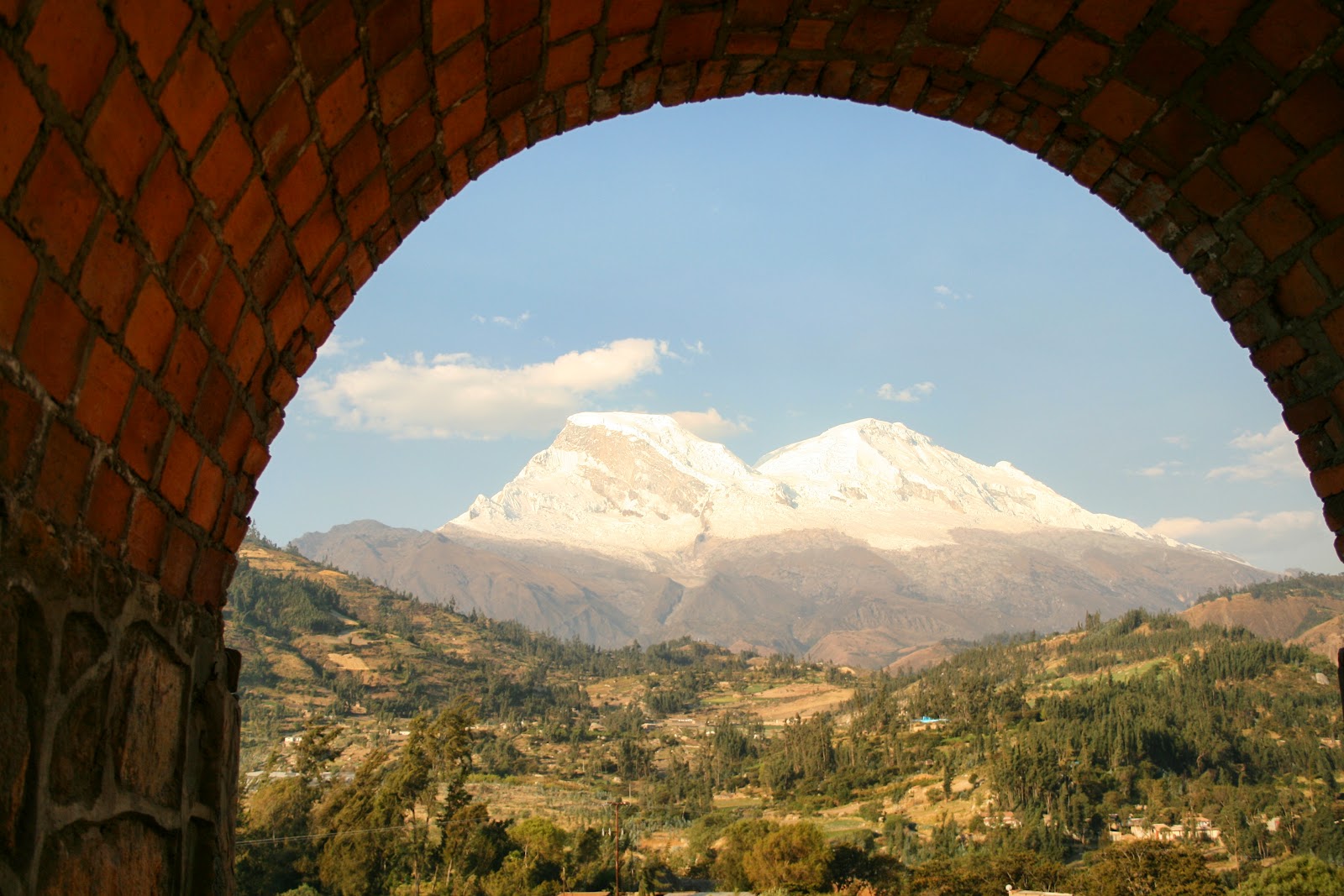
Between the majestic western Black Mountains and in the east, the White Mountain Range of Huaraz is the headquarters of the Roman Catholic Bishop. Also called The Switzerland of Peru, skiers and mountaineers from all over the world enjoy the challenge of the highest elevation at 22 205 ft.

It was a Sunday, May 31 1970. The local Catholic Church hosted a mass gathering for all the surrounding congregations. A matinee show with tickets at half price, 300 children attended the visiting circus that day and a bus full of soccer enthusiasts pulled over to watch the final FIFA match between Italy and Brazil.

At about 15:23 local time, a magnitude of 8 on the Richter scale earthquake epicentre from the Pacific Ocean and 45 seconds later, 83 000 square kilometres of buildings and roads crumbled. The quake destabilized the glacier on the north face of Mount Huascaran and glacial deposits, debris of snow, rocks and ice thundered down at 193 kilometers per hour.  This quake-induced rock and snow avalanche killed an estimated 30 000 inhabitants and wiped out the entire city of Yungay in the minutes to follow. Almost 70 000 people died on that day. It is believed that the 300 children were lead to a higher location by a clown from the circus and survived the disaster. A tourist took footage from where he stood in the cemetery designed by Swiss architect Arnold Ruska, who also died as a result of the landslide. Due to the nature of the film, the Peruvian Government claimed and locked it away.

To stand between the huge rocks constituting a significant part of the mountain’s crust is, to say the least, somewhat unnerving.    


Towering in front of the city is the tiered Cemetery of Yungay with the almost undamaged original statue of Christ at the top - a grievous tourist attraction.  Four original palm trees that once crowned the city’s main plaza, the crushed bus and remnants of the church between huge boulders are a grim reminder of the tragedy.

However, upon the rubble of the deadliest seismic disaster, townships were erected and with  sincere  dedication and piety, locals make a decent living alongside the mountains. They reap from the abundance of life, upholding their faith and offer mineral baths and hiking trails to visitors. Huaraz is known as the capital of International Friendship and Huascaran is totally worth the climbing.


 Photographs courtesy of Intuitive Composition